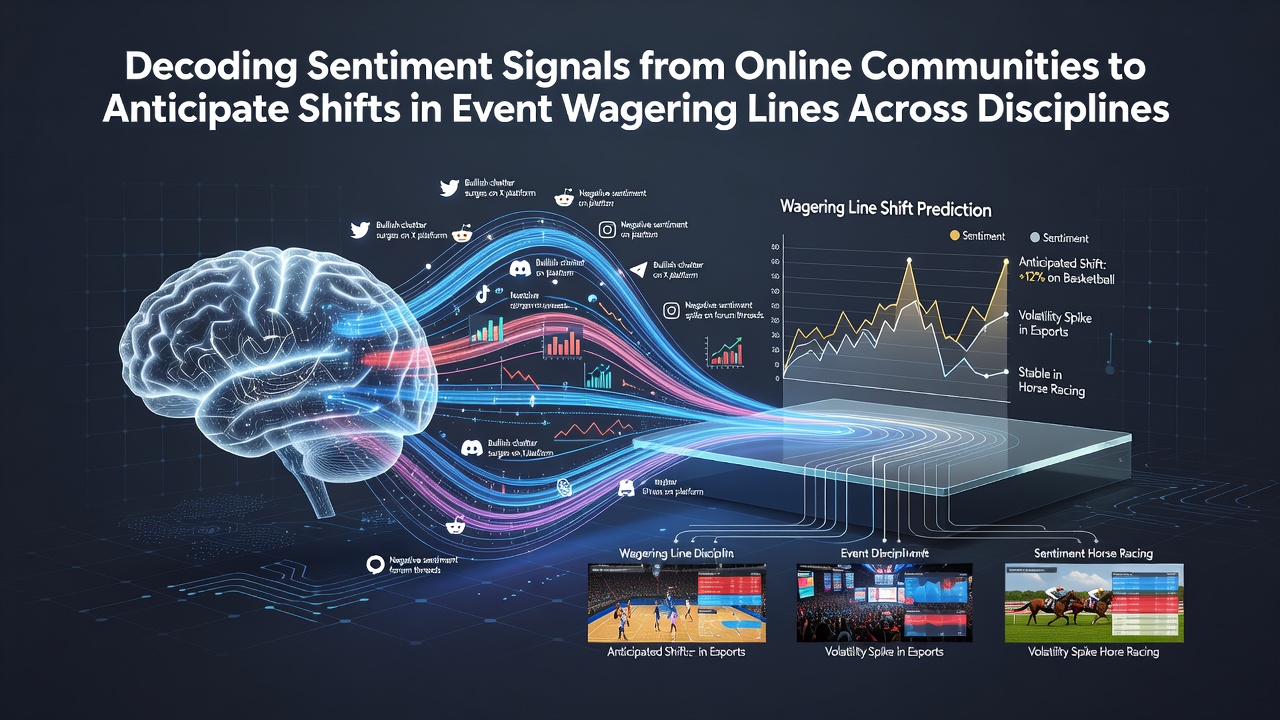
Decoding Sentiment Signals from Online Communities to Anticipate Shifts in Event Wagering Lines Across Disciplines
Online communities generate vast streams of discussion that analysts examine for patterns capable of signaling upcoming movements in wagering lines across sports, esports, and other event categories. Researchers track volume spikes, keyword clusters, and emotional tone in forums, social platforms, and dedicated betting groups to identify collective expectations before oddsmakers adjust prices. Data from these sources often precedes line shifts by hours or days, particularly when large groups converge on the same outcome narrative.
Core Techniques for Extracting Sentiment Data
Analysts apply natural language processing tools to categorize posts as positive, negative, or neutral while measuring intensity through modifiers and repetition rates. Platforms such as Reddit threads, Twitter discussions, and Discord channels supply raw input that algorithms process into time-series indicators. Observers note that sudden increases in mentions of specific athletes or teams frequently correlate with subsequent line movement once bookmakers incorporate the same information flow. Studies from academic institutions show these signals gain strength when cross-referenced with engagement metrics like share counts and reply depth.
Geographic and demographic segmentation adds another layer, since betting interest clusters differently by region. European communities may emphasize soccer totals while North American groups focus on player props, and tracking these distinctions helps isolate which lines face pressure first. In August 2026, major tournaments including late-summer tennis events and baseball pennant races produced measurable sentiment surges that preceded adjustments in totals and spread markets.
Application Across Multiple Wagering Disciplines
Football markets demonstrate clear examples where community chatter about weather impacts or injury updates drives early line movement in totals. Horse racing forums often highlight trainer comments or track bias observations that influence place and show odds before official sources confirm details. Tennis communities discuss court surface preferences and head-to-head statistics, generating signals that affect set and game handicaps across both ATP and WTA events. Esports titles such as League of Legends and Counter-Strike similarly see rapid sentiment shifts around roster changes or patch notes that move live betting lines within minutes of discussion peaks.
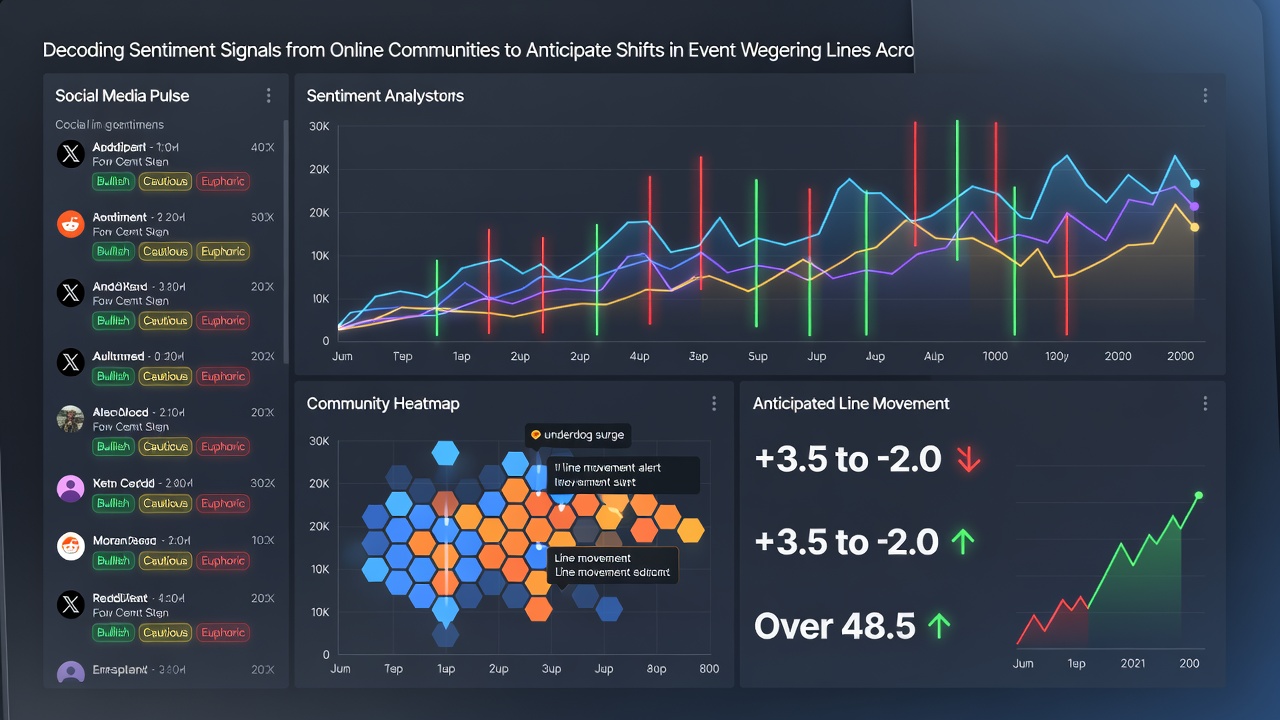
Multi-discipline monitoring requires standardized scoring systems that normalize sentiment scores across sports with different vocabularies and discussion rhythms. A spike in negative tone around a quarterback's performance carries different weight than similar language about a jockey's recent form, yet both can foreshadow line drift when volume thresholds are crossed. Industry reports indicate that operators who integrate community-derived indicators into their models achieve earlier detection of sharp action compared with those relying solely on traditional betting patterns.
Case Examples from Recent Periods
During the 2026 summer schedule, online discussions around a prominent tennis player's recovery timeline intensified on multiple platforms three days before the tournament draw. Line movement on match winner odds followed within 24 hours once volume metrics exceeded historical averages. Parallel patterns appeared in horse racing communities where comments about track maintenance at a major festival preceded drifts in morning line odds. Observers tracking these conversations documented consistent lead times between sentiment peaks and bookmaker responses across both disciplines.
Regulatory bodies such as the Nevada Gaming Control Board publish aggregated wagering data that researchers compare against sentiment timelines to quantify predictive accuracy. Separate analyses from Canadian provincial gaming authorities provide additional benchmarks showing regional differences in how quickly lines react to community signals. These comparisons reveal that markets with higher recreational participation often exhibit longer delays between online discussion surges and price adjustments.
Limitations and Integration Challenges
Noise from coordinated posting campaigns or bot activity can distort sentiment readings and produce false positives. Analysts therefore apply filters based on account age, posting history, and cross-platform verification before treating signals as actionable. Data privacy regulations in multiple jurisdictions further restrict the granularity of user information available for analysis, requiring aggregation methods that preserve predictive value while complying with legal standards. Organizations such as the Responsible Gambling Council in Canada have examined how sentiment monitoring intersects with responsible gaming frameworks without compromising individual anonymity.
Combining community signals with traditional indicators such as steam moves and sharp money tracking produces more robust forecasts than either approach alone. Teams that maintain separate pipelines for social data and betting exchange feeds report improved calibration of line movement probabilities across football, tennis, and racing markets simultaneously.
Conclusion
Sentiment extraction from online communities supplies measurable inputs that precede shifts in event wagering lines when processed through established analytical frameworks. Continued refinement of filtering techniques and integration with regulatory datasets supports broader application across disciplines while maintaining compliance with jurisdictional requirements. The pattern of early detection followed by bookmaker adjustment remains consistent across documented cases from multiple regions and event types.